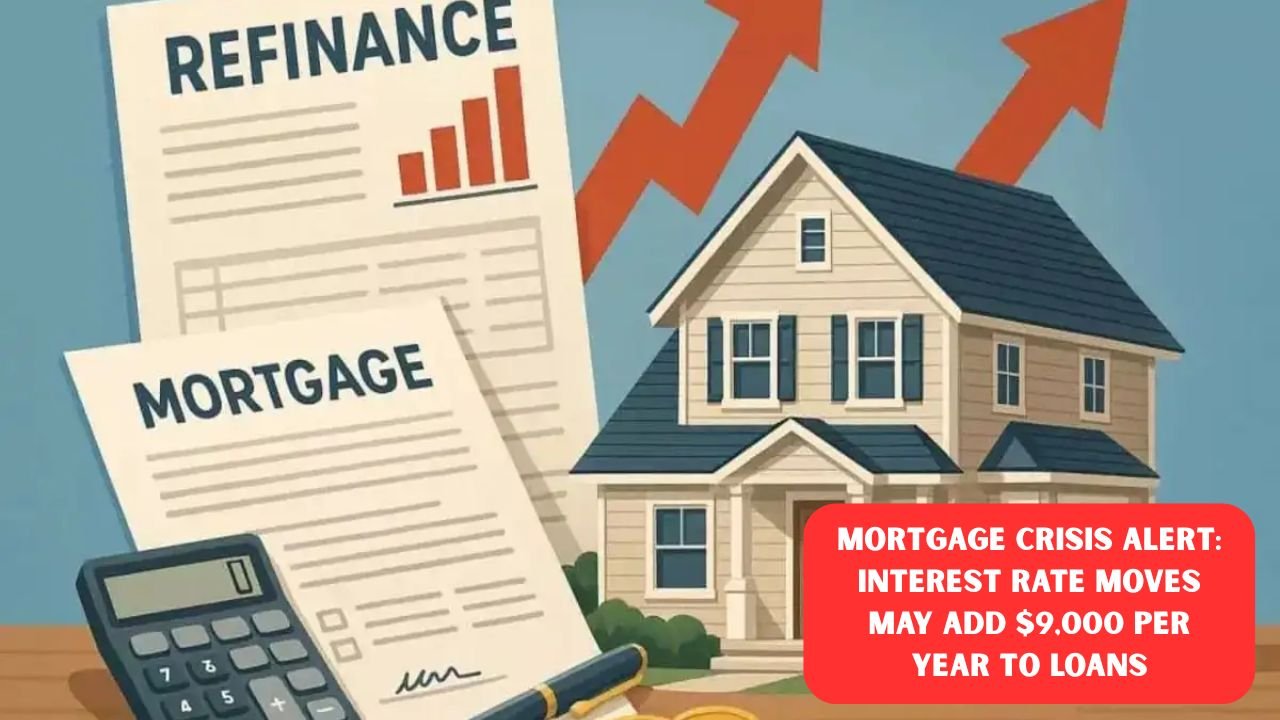
The global housing market is going through a rough patch and that is continuing to affect the day-to-day home and mortgage market. For many homeowners, the days of borrowing money at a low interest rate and having to pay a predictable amount each month is over. This is all because of a new reality that is going to fundamentally change household budgets through something called ‘higher for longer’ interest rates,’ and with the recently revised central bank forecasts, due to steady service sector inflation and energy crisis caused by recent geopolitical events, mortgage rates are at levels that just 2 years ago, seemed impossible. For a typical family with a median-sized mortgage, the loss of control that comes with mid-sized mortgage could lead to long-term severe negative effects. This is a financial and emotional crisis due to constant increases in rate. Many financial analysts suggest that this negative effect could reach a point where an average homeowner will pay an additional $ 9,000 to interest alone, significantly reducing the amount of money home owners will be able to spend. This has a severe negative effect on the economy as it will reduce the amount of money that is spend.
The Mechanics of The $9,000 Annual Surge
In order to understand how a small percentage point movement can mean a nearly $10,000 increase annually, it is important to understand amortization math. In early 2026, the spread on previous “floor” rates versus today’s market offerings have widened. Consider a homeowner with a $500,000 mortgage. An increase of just 1.8% on an interest rate can mean an additional $750 in monthly payments. In a year, that translates to $9,000, which is the “crisis alert” figure that is troubling the financial industry. For the most part, this increase is especially harsh for borrowers coming out of five-year fixed-rate agreements made in 2021 when rates were at their bottom. As these “cliff” periods expire, borrowers are significantly repositioning wealth toward the servicing of debt as opposed to the saving or investing of that wealth because they are compelled to refinance at rates that are often double what they had during these periods.
Rate Increase’s Impact on Monthly Payments
The table below captures how varying interest rates affect a $450,000 mortgage amortized over 30 years at the principal. These numbers do not include taxes, insurance, or mortgage insurance. This is a good example of why living with the reality of the $9,000 figure is becoming commonplace for most borrowers.
| Mortgage Interest Rate | Monthly Payment (P&I) | Annual Total Cost | Yearly Increase from 3.5% |
| 3.5% (Historical Low) | $2,020 | $24,240 | – |
| 5.0% (Post-Pandemic Avg) | $2,415 | $28,980 | $4,740 |
| 6.5% (2026 Market Rate) | $2,844 | $34,128 | $9,888 |
| 7.2% (Peak Forecast) | $3,054 | $36,648 | $12,408 |
What Does This Mean For The Housing Market Long-Term
Economists say that the next two years will show us the housing market reset its structure. Assuming that the housing market goes back to the metaphorical land of “free money,” it won’t happen any time soon. About $9,000 a year will be added to the mortgage a buyer is taking on. Yes, that sounds horrible, but it will help to prevent the rapid growth of home prices, and instead meet more balance, more people will be able to rent. As a home owner, the most important and first thing to do is decide to audit the loan you have. This includes a consultation with a certified advisor and the setting of a budget.
FAQs
Q1 Should I lock my mortgage in now and get it at a higher rate, or should I wait, risk it, and hope for a drop?
As of now, mortgage rates will most likely be steady, and the market will have a leap. Sub-4% is still a distant hope to us. Different budget restrictions will determine if rates will go up. For people that decide that the rate increase is worth it, the loan will still have split uses. Depending on the market’s stand.
Q2 When should I expect my loan to anticipate an increase of 9 thousand dollars?
If your current interest rate is below 4.5% and you are ending a fixed term, then you should compare your current payment to a 6.5% market rate using a mortgage calculator. For $450,000 loans, it is likely that the gap will exceed $8,000 every year.
Q3 Have the banks provided any support for the customers impacted by the increase?
Yes, the majority of the major lenders have updated their 2026 hardship guidelines for banks. Possibilities include interest only loans for a period of time, further extensions of the loan period are possible. These options come with a high degree of risk since they increase overall interest paid in a loan.